
Lombok in the Rainy Season: What Still Works and What to Move
Quick summary:
- The Lombok rainy season runs roughly from November to March, with rain usually arriving in bursts rather than all day.
- Waterfalls, villages, food, and rice terraces still work well; boat days and summit treks need flexible planning.
- Rinjani summit treks close every year from January to around the end of March, so plan the valley instead.
The Lombok rainy season has a reputation it only half deserves. Yes, it rains, sometimes hard, and yes, some plans need moving. But rain here tends to come in heavy bursts, often in the afternoon, and then the sky clears again, leaving the rice terraces a shade of green that dry-season visitors never see. This guide covers which trips still run well between November and March, which ones to schedule with a back-up day, and the one big closure you cannot work around.
Think of it this way: in the dry season you plan the day and the weather follows. In the wet season, the weather sets the order and you rearrange the pieces. The pieces themselves are mostly still there.
When Is the Rainy Season in Lombok?
The rainy season in Lombok runs roughly from November to March. Rain starts building from October, the wettest stretch usually falls around December to February, and April is a transition month when showers become less frequent. The dry season, roughly June to September, is the clearest and busiest time of year.
These are patterns, not forecasts. One week in January can be bright and calm while a week in November is grey. For trekking, ANTARA's guide to Rinjani's seasons and weather describes June to September as the best window and October to December as the period when rainfall rises.
| Month Range | What to Expect | Best Use of the Day |
|---|---|---|
| November to December | Rain arriving, often in the afternoon | Outdoor plans in the morning, food and culture later |
| January to February | Wettest stretch of the year | Flexible days, waterfalls and villages, short boat trips on calm mornings |
| March to April | Rain easing, landscapes still very green | Most day trips run normally; summit treks reopen around April |
Which Lombok Trips Still Work in the Rain?
Most land-based day trips still work in the rainy season, as long as the outdoor part happens in the morning. Waterfalls, villages, rice terraces, and food stops are the most reliable, and a private car means you can shuffle the order on the day instead of following a fixed group schedule. That flexibility is the main reason a Lombok day tour suits this season better than a rigid itinerary.
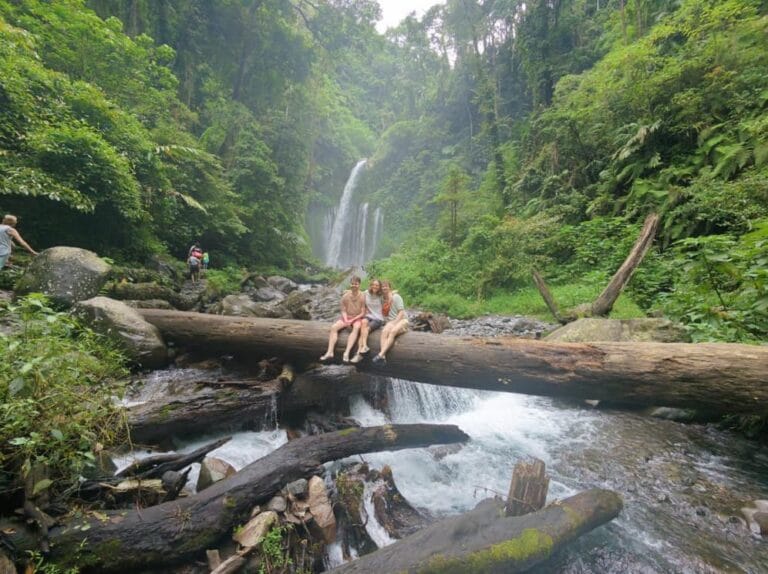
Waterfalls. The north Lombok falls carry noticeably more water in the wet months, which makes them more impressive and also more serious. After heavy rain upstream, guides may shorten the walk or skip river crossings, and that call should always be theirs, not the itinerary's. A morning start, as on the One Day Tour Tiu Kelep & Sendang Gile Waterfall, gives the best chance of a dry walk back.
Rice terraces and villages. This is where the rainy season quietly wins. Planting season turns the terraces bright green, and village visits barely depend on the weather at all. Tetebatu, at the foot of Rinjani, is a good example: a walk through the fields in the morning and lunch with a terrace view, both covered on the one day trip tetebatu.
📖 Related Articles:
What Should You Move or Plan With a Back-up Day?
Two things deserve a back-up day in the rainy season: boat trips and anything that depends on a clear view. Neither is cancelled by default, but both are the first to change when the weather turns.
Boat days to the Gili Islands. Crossings run most days, but strong wind and high waves can delay or cancel boats, and harbour authorities make that decision on the day. Put island days early in your trip, not on the last morning before a flight, so a cancelled crossing simply moves to the next day.
Sunrise and viewpoints. Cloud covers the eastern horizon more often in the wet months, especially in the highlands. If sunrise matters to you, give it two mornings rather than one. The south coast is a useful alternative on cloudy highland days, and the One Day Sasak Culture, Kuta Mandalika & Selong Belanak Beach Tour mixes beaches with a village visit, so a grey sky does not empty the day.
Is Mount Rinjani Open in the Rainy Season?
No. The Rinjani summit and crater trails close every year from January to around the end of March, for safety and to let the trails and ecosystem recover. For the most recent season, Rinjani National Park closed all trekking routes from 31 December 2025 with a planned reopening in early April 2026, as reported by detikBali on the Rinjani trail closure.
The closure applies to the trekking routes, not to the area around them. You can still visit the Sembalun valley on the eastern slope, walk among its farms, and see Rinjani from below when the cloud lifts. If a summit trek is the reason for your trip, plan it between April and December and check the park announcement before booking anything that cannot be changed.
How Do You Plan a Lombok Trip in the Wet Season?
Plan the wet season around three simple rules: outdoor first, boats early, and one spare day. Put walks and viewpoints in the morning, leave food, markets, and villages for the afternoon, and keep one day in the middle of the trip without fixed bookings so the weather has somewhere to push things.
This is exactly the kind of shuffling a local operator does every day during these months. When you share your dates, we build the order of your days around the weather pattern rather than a fixed template, which is the idea behind every trip on our Lombok Tour Packages by Lombok Travelution page.
📖 Related Articles:
Conclusion
The Lombok rainy season, roughly November to March, changes the order of your days more than the list of things you can do. Waterfalls, rice terraces, villages, and food all still work, boat days and sunrise need a back-up, and the Rinjani summit is closed from January to around the end of March. In the wet season, the island does not shut down; it simply asks you to keep your mornings free.
Frequently Asked Questions About the Lombok Rainy Season
When is the rainy season in Lombok?
Roughly from November to March. Rain builds from October, the wettest period is usually December to February, and April is a transition month.
Does it rain all day in Lombok during the wet season?
Usually not. Rain tends to arrive in heavy bursts, often in the afternoon, with clear spells in between. Mornings are generally the best time for outdoor plans.
Is it worth visiting Lombok in the rainy season?
Yes, if you stay flexible. The landscapes are greener, waterfalls are fuller, and day trips still run. Plan boat days and sunrise with a back-up day.
Can you climb Mount Rinjani in the rainy season?
Not from January to around the end of March, when the trekking routes close every year. Treks usually reopen in early April.
Do boats to the Gili Islands run in the rainy season?
Most days, yes. Strong wind or high waves can delay or cancel crossings on the day, so schedule island days early in your trip.
Which Lombok day trips are best in the rainy season?
Waterfalls in the north, rice terraces and villages around Tetebatu, and cultural tours in the south, all started in the morning.
Share
Paket wisata kami

Lombok 3D2N Tour Package Itinerary Details
Must visit destinations: Gili Trawangan, Mandalika Circuit, Sade Village, Tanjung Aan Beach, and Merese Hill. Lowest price estimate: starting from
Gili Sudak Snorkeling: Best Reef Spots, Boat Costs, and Ideal Timing
Quick summary: Gili Sudak sits in the Sekotong cluster off south-western Lombok, not in the Gili Trawangan cluster up north.
This Lombok Village Still Builds Its Floors With Buffalo Dung, and There Is a Reason
How Sasak villages in Lombok work, why floors use buffalo dung, and visiting Sade.
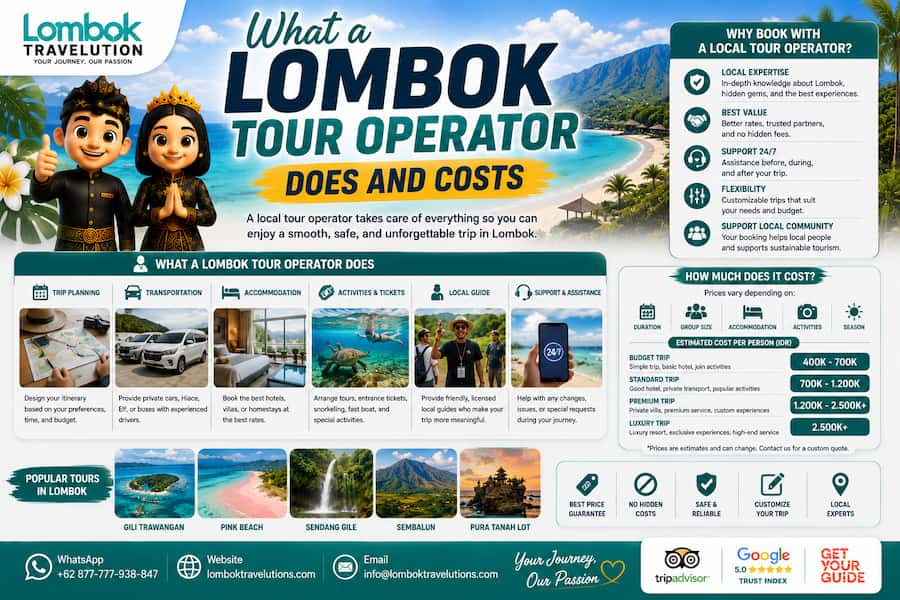
What a Private Lombok Tour Operator Actually Does, and What You Pay For
A private Lombok tour operator is a licensed local business, not just a booking form with a nice photo. Before
Corporate Outing in Lombok: One Company Group, From Sembalun Valley to the Mandalika Circuit
Real photos and notes from one company group on a corporate outing in Lombok.